
Overview
Worldnet is a B2B logistics company already trusted by major fashion brands. Operationally capable. Commercially serious. Externally, though, it looked like any other courier.
The business had capability. The market could not see the story. That is a go-to-market problem, not a design problem.
The challenge
Worldnet faced a common B2B constraint: strong delivery, weak distinction.
- Visual and verbal identity blended into corporate logistics norms.
- Sales depended heavily on outbound effort.
- The founders' human story and values were invisible to buyers.
Yet there was a real differentiator: a personal founder journey and a client-first operating culture that fashion brands already experienced in private, and almost never saw in public.
The strategy
Paceject treated brand as a GTM lever, not a cosmetic refresh.
The diagnosis pointed to a positioning and distribution problem: Worldnet needed to be understood as a cultural insider for fashion logistics, not a commodity courier.
The strategy shifted from “promote service features” to “build relevance and inbound pull”:
- Reposition the brand voice around empathy, work ethic and insider fluency.
- Build creative artifacts people wanted to wear and share.
- Replace outbound-heavy acquisition with attention that started conversations.
The expression became memorable through limited merchandise drops and the line #wegiveaship.
Execution highlights
1) Narrative and identity reset
Paceject rebuilt positioning from founder story to market expression, producing a brand voice and visual direction that could live in both logistics and fashion contexts without pretending Worldnet was a fashion brand.
2) Merchandise as strategic media
Rather than sell merch at scale, Paceject treated it as cultural placement.
- Limited, high-intent pieces
- In-house experimentation
- Placement with stylists, showrooms and insiders
Scarcity drove demand and social proof among the people Worldnet actually needed to reach.
3) Cultural seeding and compounding visibility
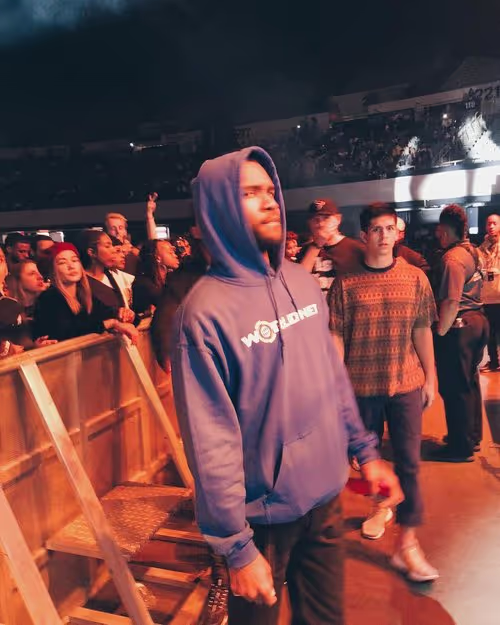
Pieces appeared in fashion-week ecosystems, backstages and creator circles. Momentum accelerated when Frank Ocean wore a Worldnet hoodie at ComplexCon and later appeared in related visibility moments.
4) Earned media flywheel
As cultural signals compounded, media coverage followed, including Vogue, Hypebeast, Complex and The New York Times.
No paid-media dependency. No outsourced PR theatre.
Outcomes
The work changed perception and commercial motion:
- Significant website traffic growth
- Sustained inbound demand from fashion brands and creative operators
- Daily request flow reducing cold-start outreach dependency
- Clearer market positioning from “another courier” to a recognised fashion-world logistics partner
Internally, confidence and alignment improved. Teams began operating as brand builders, not only service operators.
What Paceject delivered
- Brand strategy and narrative architecture
- Cultural positioning and market reframing
- Voice and visual refresh
- Merchandise campaign system design
- Seeding and placement strategy
- Earned-attention playbook
- Inbound conversion model
- Internal brand activation and adoption support
Final takeaway
Worldnet did not just refresh its look.
It changed how the market talked about the company, how prospects discovered it, and how the team understood its commercial role.
That is brand strategy used inside a go-to-market problem, diagnosis of the constraint, then implementation of the levers that mattered.
Related reading: Brand Strategy for B2B Businesses: When Does It Actually Matter? · GTM Strategy & Implementation